A structured debrief: what happened, why it happened, what each person would do differently. **The team diagnoses itself** — which is why the insight survives the drive home.
THE ART OF BUILDING BETTER TEAMS / CORPORATE TRAINING
Where great teams
become greater.
Transform the way your leaders think, your teams work, and your people grow. Training designed for what happens after the room.
01 / THE EXPERIENCEDesigned to move people forward.
SCROLL TO EXPLORE
15+ YEARS50K+ LEARNERS10+ COUNTRIES
Rooms built for teams inside
NestléTotalPhilip MorrisCoca-ColaUnileverPepsiCoFrieslandCampinaIFFCOP&G
CRAFT — training with a spine.
Most training starts when the trainer walks in and ends when they walk out. CRAFT treats the room as one stage out of five. The gap is named first, the agenda is built second, the practice happens third, and the habits are tracked last.
01Consult02Review03Architect04Facilitate05Track
THE DESIGN BEHIND THE EXPERIENCENot a workshop.
A working system.
A working system.
Five connected stages. One clear line from intention to impact.
01 — 05 / CONSULT TO TRACK
Stage 01 Consult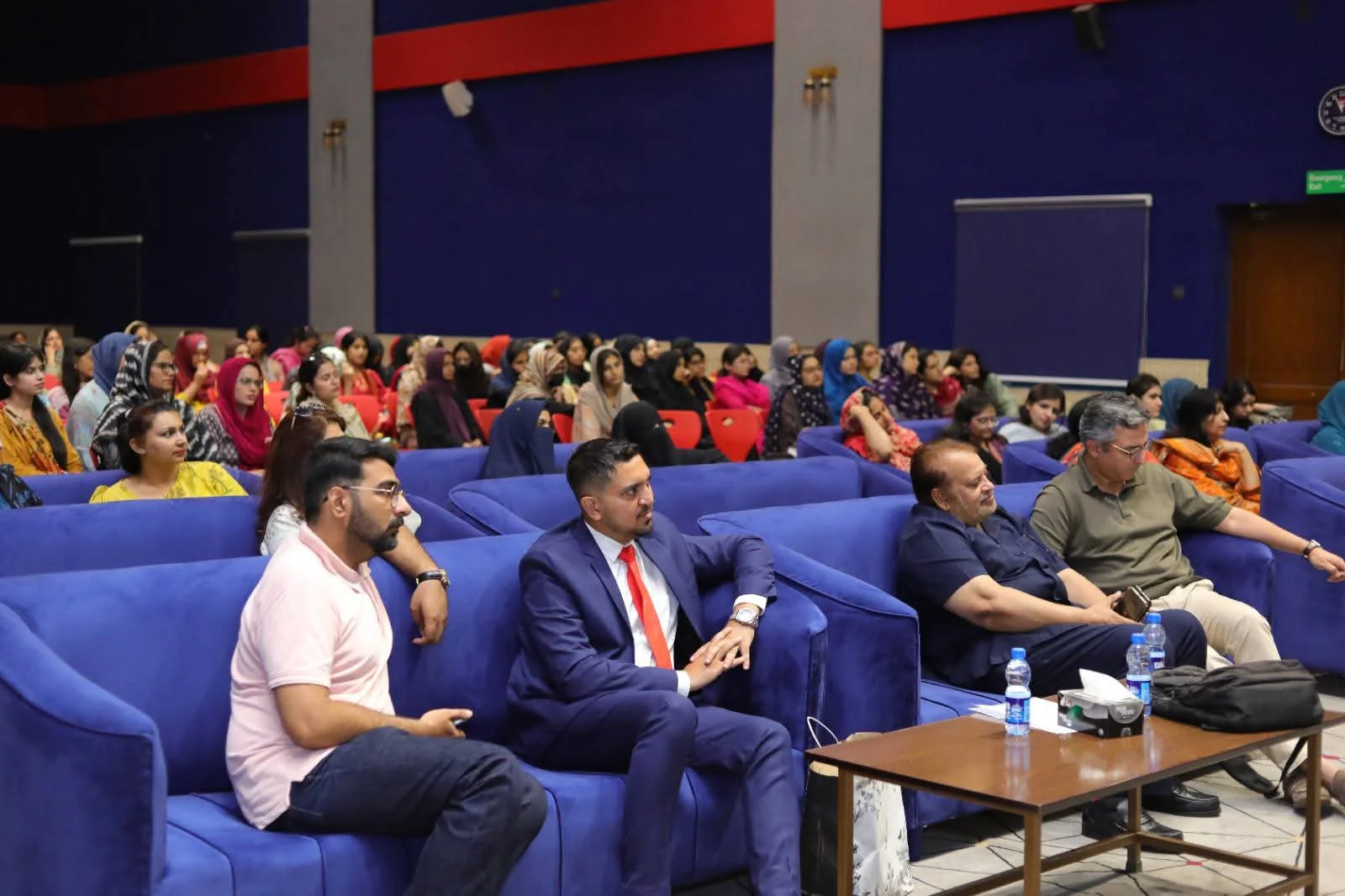
STEP 01 · C
Consult.
Understand the team’s real needs and skill gaps through assessments, interviews and straight conversations with the people who own the problem.
- Stakeholder interviews with sponsors and managers
- Success metrics agreed before design starts
- A written needs map, not a verbal hunch
Track feeds back into Consult. Every cycle raises the baseline — so the second engagement starts where the first one finished, instead of starting over.
DARE — how the learning actually lands.
CRAFT designs the engagement. DARE is what happens in the room: a four-step loop that starts with doing something, then makes people think about it, then shifts how they see it — and only then asks them to change how they work.
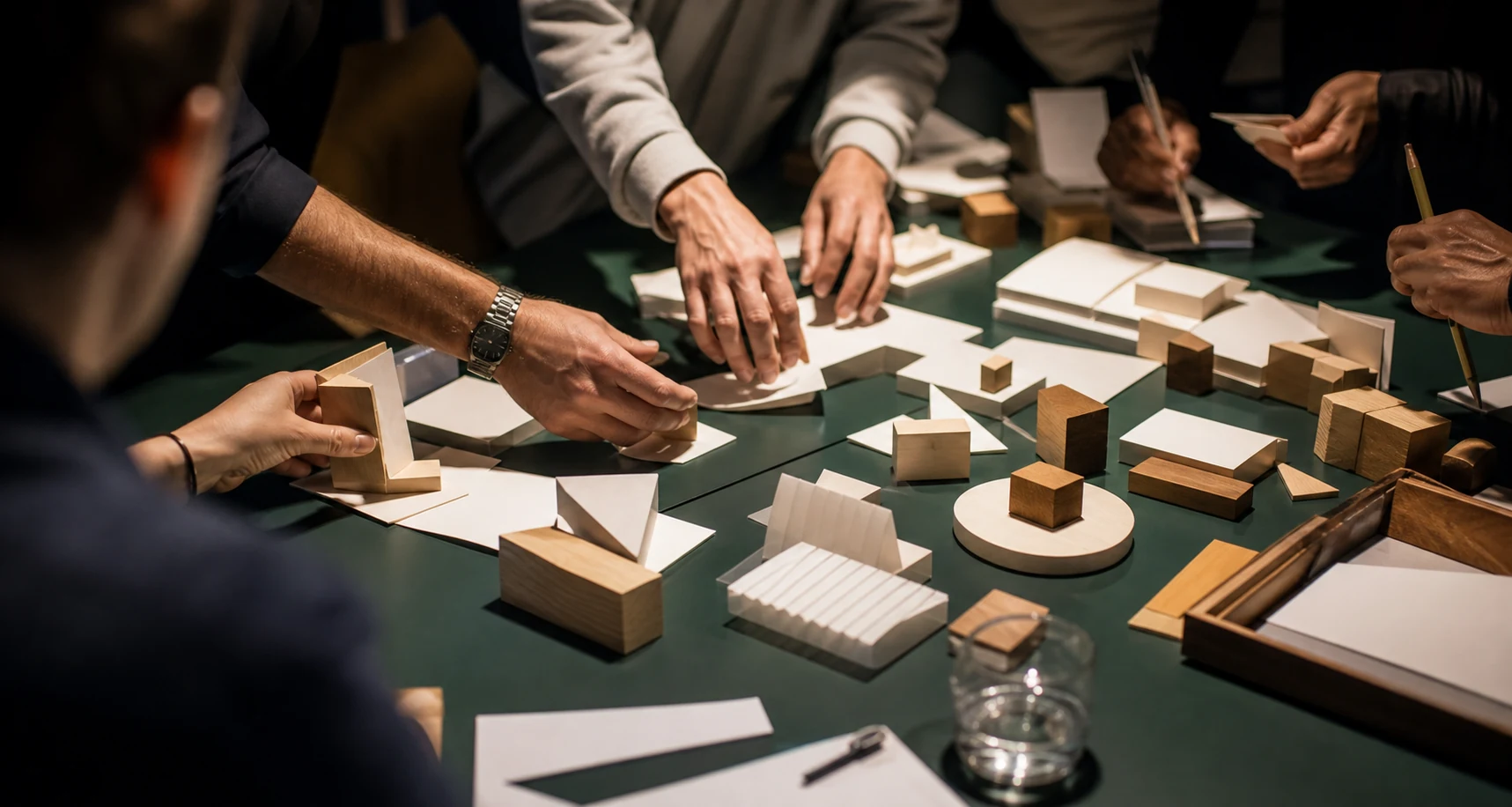
Old assumptions get named and challenged, then replaced with a model the team can use on Monday. This is where a habit changes — not when someone is told to change it.
Action plans, manager nudges and follow-up practice turn a good day into a changed default. **Embed is where training becomes behaviour** — and where Track gets its evidence.
70%Practice, not lecture
4Steps in every cycle
15′Max input before doing
90dUntil habits are checked
Pick the skill. We build the room.
Six signature programmes, each built for mid-level managers, senior leaders and intact teams. Every one is delivered through CRAFT and DARE — the difference is the skill in the middle.
 01Direction & identity
Leading with Purpose
Purpose-led leadership for clearer direction, meaningful decisions and action others can follow — even when the answer isn't obvious yet.
ManagersSenior leaders1–2 days
Inside the programme
- Naming your leadership intent in one sentence people repeat
- Decisions under competing priorities — a live case lab
- Communicating direction so teams can act without a second meeting
 02Self-awareness
Emotional Intelligence
Self-awareness, empathy and more thoughtful responses in the moments that matter — the ones that decide whether a conversation opens or closes.
LeadersTeams1–2 days
Inside the programme
- Recognising your own triggers before they make a decision for you
- Reading the room: what people mean when they go quiet
- High-stakes conversations rehearsed, with honest feedback
 03Trust & collaboration
Team Building
Trust, collaboration and shared ownership built through participation and practical challenges — not through trust falls and forced fun.
Intact teams8–201–2 days
Inside the programme
- Shared problem-solving where no one can win alone
- Making conflict safe enough to be useful
- Agreeing the team's operating rules — then practising them
 04Navigating change
Change Management
Practical support for people navigating change, resistance and new ways of working — so change is led, not announced and survived.
ManagersExecutives1–2 days
Inside the programme
- Resistance as information — reading what it's actually telling you
- The change story: same message, six different audiences
- Keeping momentum after the launch meeting is long over
 05Revenue & influence
Sales Training
Scenario-led practice for stronger customer conversations, sharper selling skills and follow-through that shows up in the pipeline.
Sales teamsAccount leads1–2 days
Inside the programme
- Consultative discovery — asking before pitching
- Objections handled calmly, in the customer's language
- Negotiation practice on your real deals, with feedback
 06Everyday leadership
Leadership Development
Everyday leadership behaviours for emerging and experienced leaders, developed through practice on the situations they actually face.
Emerging leadersMid–seniorMulti-module
Inside the programme
- Leading former peers without losing the room
- Feedback that lands without bruising, and delegation that sticks
- Multi-module arc with workplace sprints between sessions
Three doors into the same room.
One urgent skill, a full leadership academy, or certifying your own trainers — the CRAFT engine runs underneath all three. Pick the shape that fits the gap.
Sprint · 1–2 days
The Team Workshop
One team, one skill, one focused day — built on your real cases and run at high energy.
- Format
- In-person or virtual
- Group
- 8–20 participants
- Best for
- Teams with one named gap
- Custom case pack from your work
- Practice rounds with live feedback
- Action cards for Monday morning
Signature · Multi-week
The Leadership Academy
Workshops layered with workplace sprints until the skills become the team's default behaviour.
- Format
- 6–8 modules + sprints
- Duration
- 8–12 weeks, cohorts
- Best for
- Mid-level & senior leaders
- Between-module application assignments
- Manager nudges at 30 / 60 / 90 days
- Impact read-out for sponsors
For L&D teams
Train the Trainer
Certify your internal facilitators — delivery skills, energy management and the full CRAFT toolkit.
- Format
- Workshops + observed practice
- Duration
- 4–6 weeks
- Best for
- Internal trainers, L&D
- Facilitation skills toolkit
- Observed practice with feedback
- Certification assessment
This is for some rooms. Not all of them.
Training only works when the audience is right. This work is built for mid-level managers, senior leaders and executives — and for the intact teams they lead. If that’s not your group, the honest answer is a different kind of help.
This is for you if…
- You manage managers, lead a function, or sit on a leadership team
- Your team shares one skill gap you can name out loud
- You want behaviour change, not a completion certificate
- Managers will protect time for practice and follow-up
- You're comfortable using your real work as the case material
- You want measurement that goes beyond the happy sheet
Typical group: 8–20 participants per room, or a cohort across modules.
This is not for you if…
- You need a one-hour motivational spark, not training
- You want a checkbox that says "training delivered"
- The group is a mixed-level intake with no shared work
- Nobody in the room can apply the learning afterwards
- The plan is to skip practice and keep the slides
- One individual needs private, confidential development
Different need? One-to-one coaching, LMS and instructional design sit in the wider ecosystem.
Experienced teams
Established teams ready to strengthen trust, collaboration and performance together.
Mid-level managers
The layer that runs everything: translating strategy into work, and work into results.
Senior leaders & executives
Behaviour at the top gets copied fastest — practice there changes more than one room.
One day. Five moves. No day-long lectures.
Every workshop follows the same rhythm — open the room, give the minimum input, practise hard, apply it to live work, commit and close.

THE LEARNING JOURNEYPractice. Apply. Move forward.
FROM ROOM TO REAL WORK
FROM ROOM TO REAL WORK
Every moment is designed to turn insight into action.
30′
Open & warm-up
A game tied to the theme — energy up, phones down, the day's promise on the wall.
90′
Core input
The model in short bursts. Never more than fifteen minutes of talking before something is tried.
120′
Practice rounds
Simulations, role-plays and real cases in small groups, with honest feedback after every round.
90′
Application
Teams apply the skill to their actual work — live emails, live pipeline, live conversations.
60′
Commit & close
Action cards, a scorecard, and the 30-day nudge plan already on the calendar.
Training doesn’t live in the workshop day.
It lives in what people carry out of the room and keep using three weeks later. Every engagement ships with the full instrument kit.
Needs map
Stakeholder input, success metrics and constraints — agreed on paper before design begins.
Action cards
Every participant leaves with three commitments tied to their own KPIs, not the trainer's.
Practice kits
Role-play cards, simulation briefs and case packs built from your real work — not imagined ones.
Workbooks & job aids
One page per skill, designed for the desk drawer people actually open — not the archive.
Manager nudges
Short follow-up prompts at 30, 60 and 90 days that keep practice alive after the energy drops.
Impact scorecard
Before-and-after measurement the sponsor signs — behaviour first, business metrics second.
Included in every engagement — no upsells, no add-ons.
Voices from the room
What people say afterwards.
“Amazing facilitation skills. Connects with people and ignites action from the first hours of the workshop.”
Cavin JohnsLeadership Workshop Participant
15+Years facilitating
600+Courses designed
50K+Learners in the room
10+Countries delivered in

The trainer
About Zohaib Butt.
In the room, not on the sidelines
Zohaib Butt is a corporate trainer and leadership coach who has spent more than fifteen years building the kind of rooms he now facilitates — the ones where a manager has to make a call, hold a hard conversation, or get a team that has stopped listening to start again.
He is the founder of Leadership Insights, and has designed 600+ courses, trained teams inside organisations such as Nestlé, Total, Coca-Cola, Unilever, PepsiCo and P&G, and reached more than 50,000 learners across 10+ countries.
His approach is deliberately unglamorous: understand the actual gap, design around the actual work, and then make people practise until the new behaviour is easier than the old one. That is the whole idea behind CRAFT and DARE.
- Founder & Director, Leadership Insights
- Corporate trainer for mid-level, senior and executive audiences
- Delivered in-person and virtually across the USA, UK, Europe, Middle East and Pakistan
- Designer of train-the-trainer programmes and 600+ learning courses
Zohaib ButtCorporate Trainer & Leadership Coach
Questions, answered honestly.
How is this different from a normal workshop?
Most workshops are one-off events. This is a system. Every engagement runs CRAFT — Consult, Review, Architect, Facilitate, Track. The room is only stage four. Before it, the gap is verified; after it, workplace sprints and 30/60/90-day follow-ups make sure the skill is used, not just applauded.
What exactly are CRAFT and DARE?
CRAFT is the five-stage engagement framework — Consult, Review, Architect, Facilitate, Track. DARE is the in-room learning loop — Do, Analyse, Reframe, Embed. CRAFT decides what happens across the engagement; DARE decides what happens in every single exercise.
Who is the training designed for?
Mid-level managers, senior leaders, executives, and the intact teams and emerging leaders directly around them. The work is practice-heavy, so it assumes participants have real decisions, real conversations and real accountability to bring into the room.
What group sizes and formats do you work with?
Typically 8–20 participants per room so that everyone practises, with larger cohorts split into groups. Delivery is in-person or virtual, as a one-to-two-day sprint or a multi-module programme with workplace sprints in between.
Can the content be customised to our industry?
It has to be. The Consult and Review stages exist precisely so the cases, simulations and language come from your organisation — your customers, your meetings, your decisions. Generic content is what CRAFT is built to avoid.
How do you measure whether it worked?
Success metrics are agreed during Consult, before design starts. After the room, Track collects behavioural and business indicators at 30, 60 and 90 days and packages them into an impact scorecard the sponsor signs off on.
What do participants actually take away?
Action cards with three personal commitments, practice kits and case packs, workbooks and job aids for the desk, manager nudges at 30/60/90 days, and a shared language the team keeps using after the room empties.
How do we start?
A free 45-minute discovery call. We name the gap, the audience and what success must look like in numbers — and you leave knowing whether this is the right vehicle, whatever you decide next.
Next step
Ready to train your team?
Book the free discovery call — forty-five honest minutes on the gap you need closed, the team that needs it closed, and whether CRAFT is the right vehicle to get you there.