
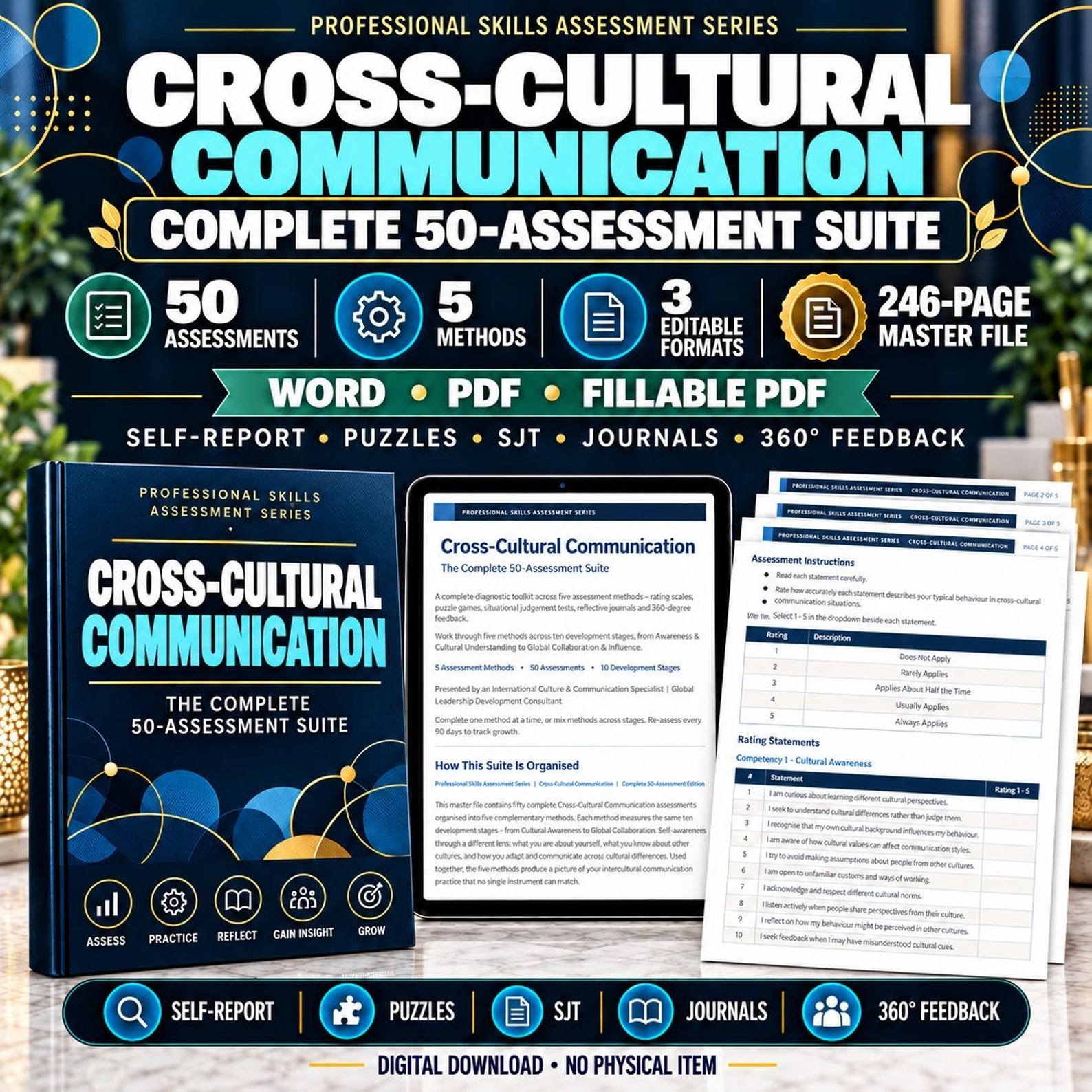
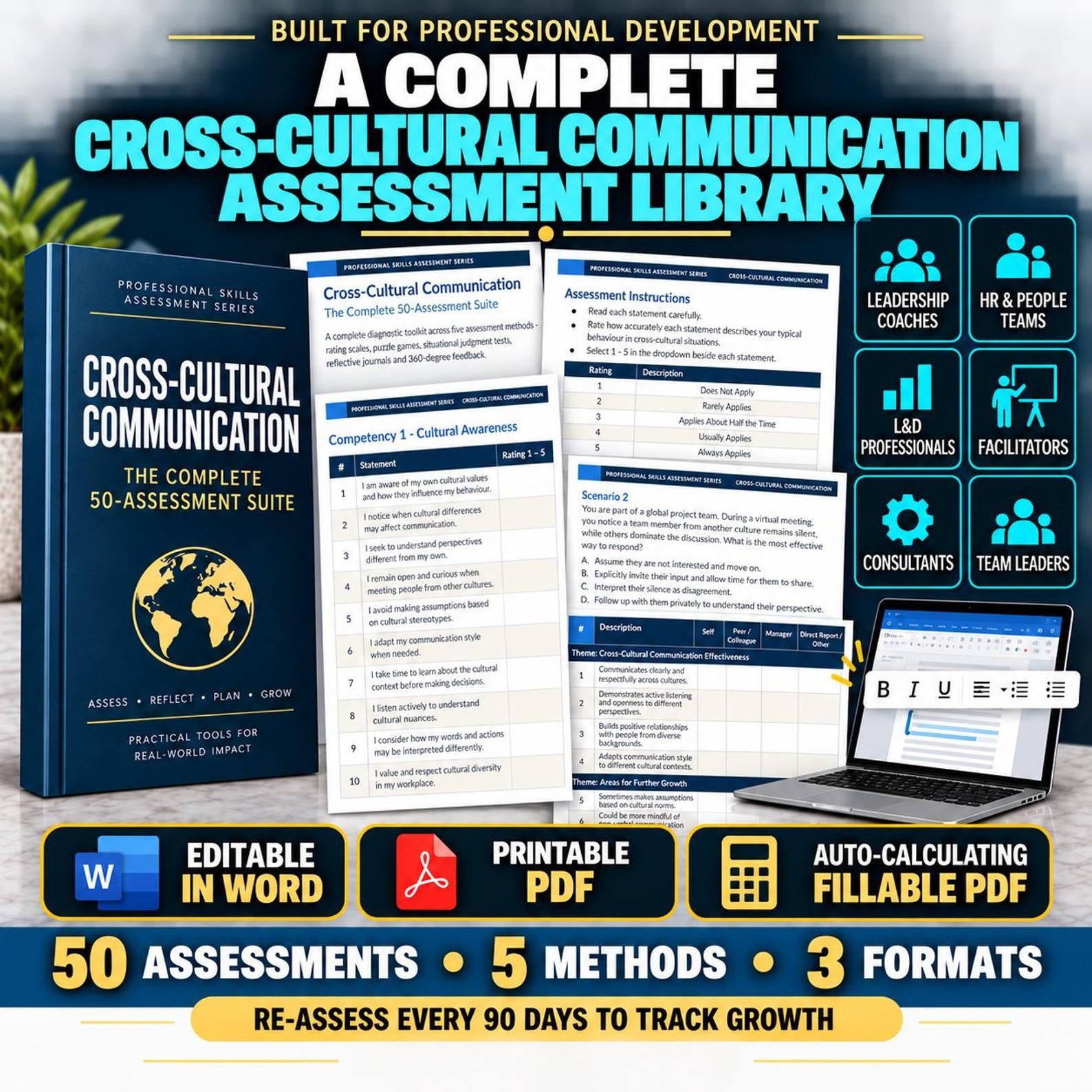
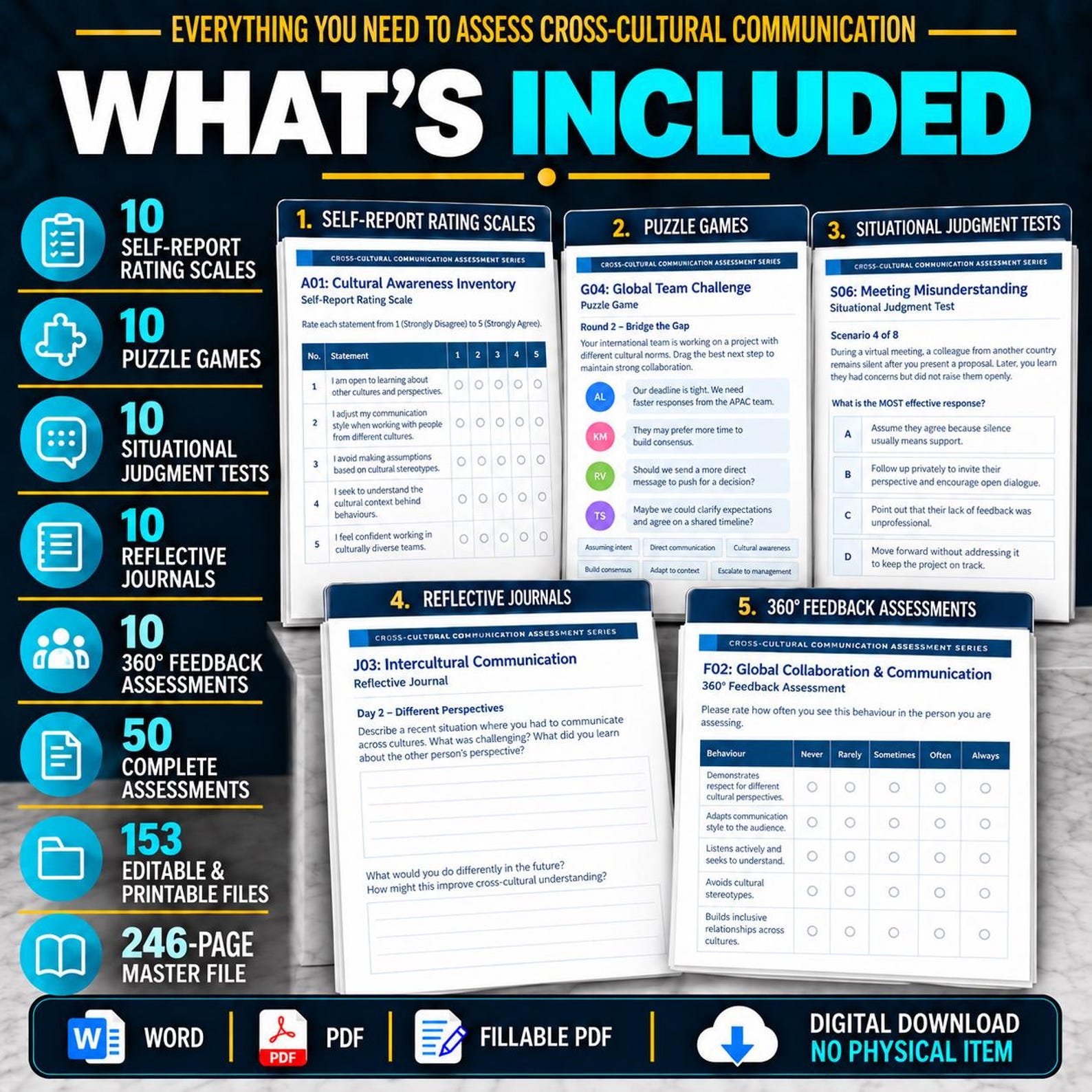
The complete suite includes 50 assessments across five structured assessment methods. Each method follows the same 10-stage development pathway, progressing from cultural self-awareness and mindset to everyday application, measurable improvement and long-term mastery.
With 153 editable and printable files, plus a comprehensive 246-page master file, this resource provides a complete framework for workshops, coaching sessions, leadership development, diversity training and workplace learning programmes.
WHAT’S INCLUDED
• 50 cross-cultural communication assessments
• Five structured assessment methods
• 10 progressive development stages
• 153 editable and printable files
• Comprehensive 246-page master file
• Editable Word documents
• Printable PDF files
• Auto-calculating fillable PDF assessments
• Scoring guidance and interpretation support
• Reflection questions and development activities
• Practical workplace scenarios
• Individual and team development resources
THE FIVE ASSESSMENT METHODS
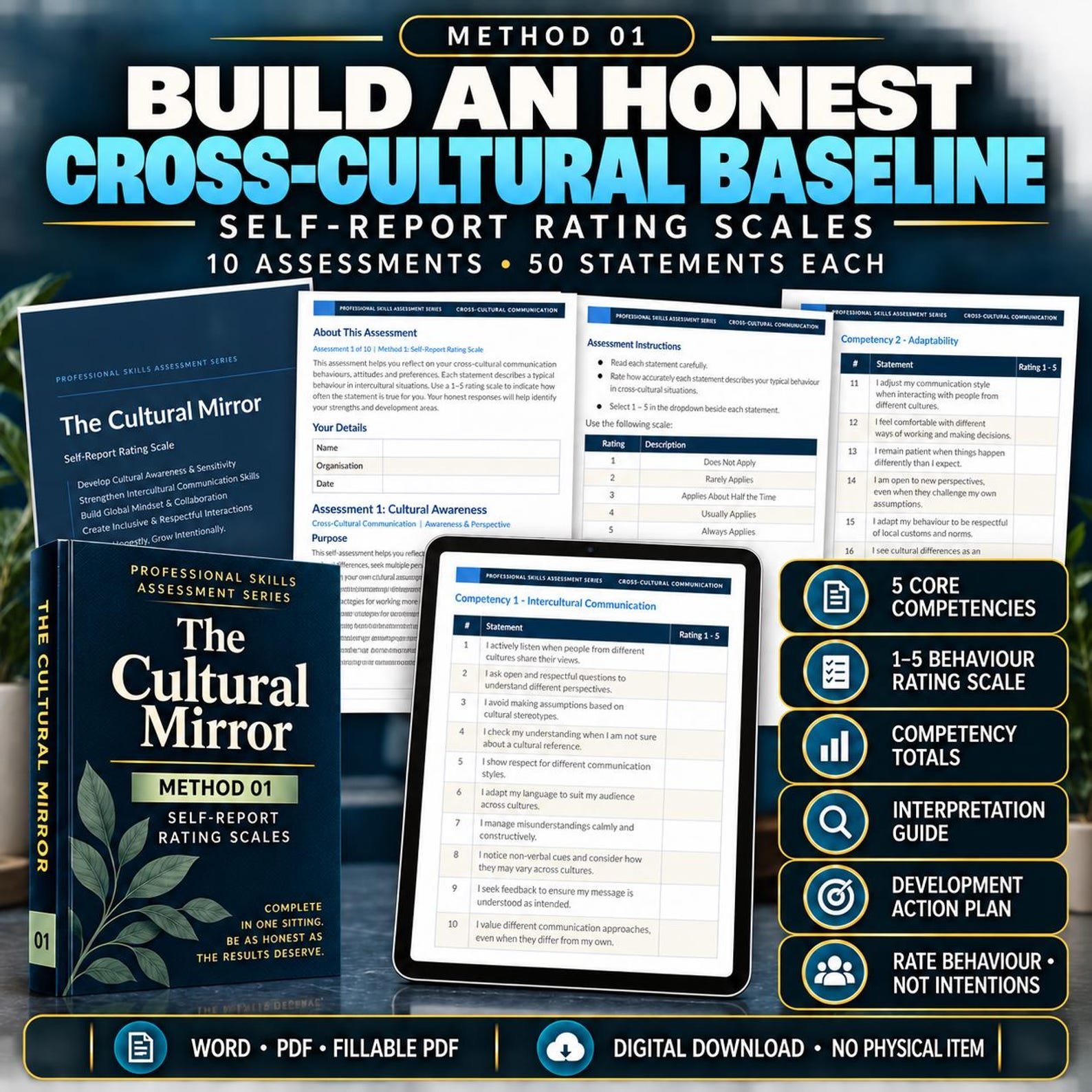
1. SELF-REPORT RATING SCALES
• 10 structured self-assessments
• 50 statements in each assessment
• Measures cultural awareness, communication habits and workplace behaviours
• Helps participants recognise personal strengths and development areas
• Suitable for coaching, workshops and individual reflection
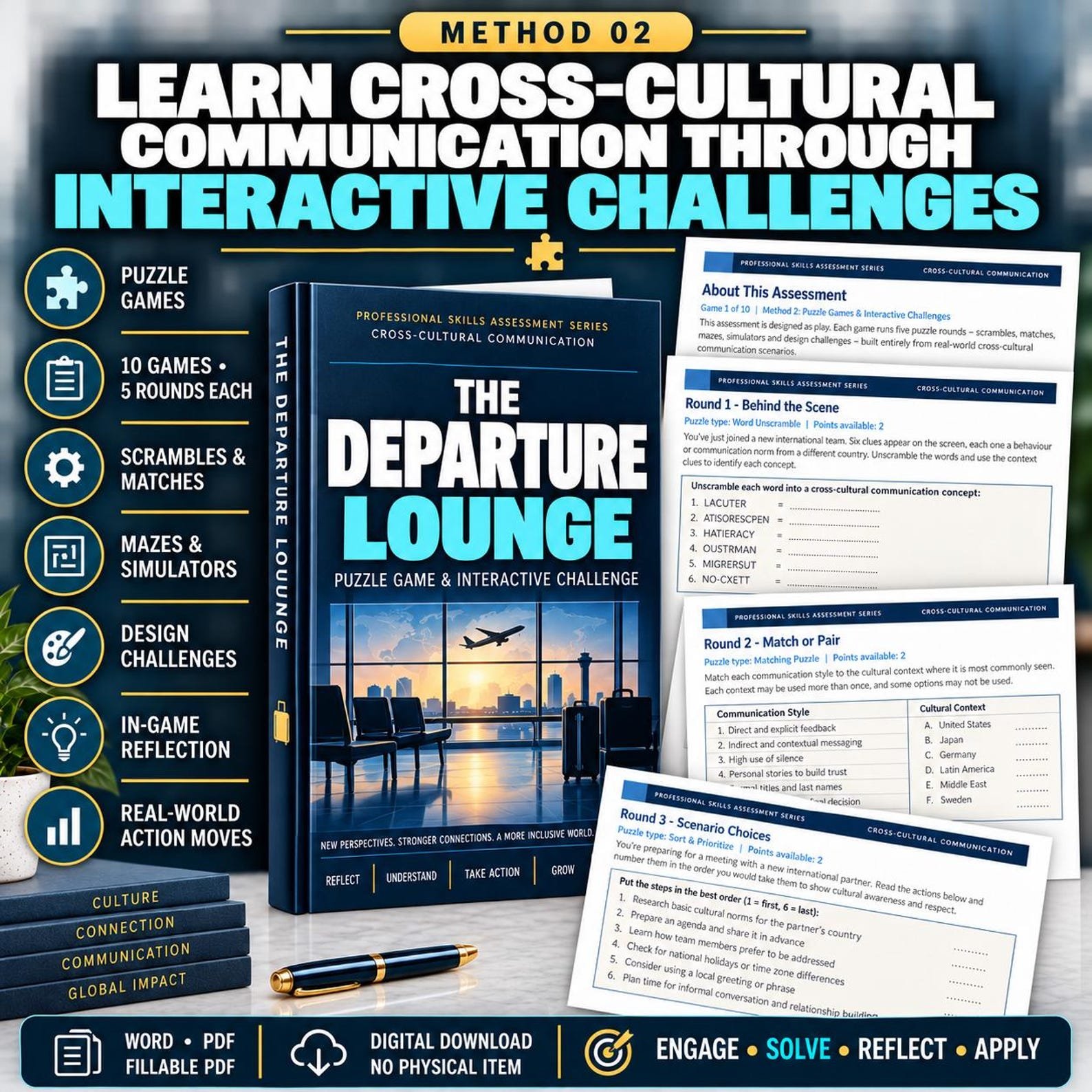
2. PUZZLE GAMES
• 10 interactive puzzle-based assessments
• Five progressive rounds in each activity
• Encourages collaborative thinking and cultural awareness
• Explores assumptions, interpretation and communication patterns
• Suitable for team training and facilitated workshops
3. SITUATIONAL JUDGMENT TESTS
• 10 scenario-based assessments
• Eight workplace scenarios in each assessment
• Four possible responses for every scenario
• Participants identify the most and least effective responses
• Includes scoring guidance and response rationales
• Develops practical decision-making in cross-cultural situations
4. REFLECTIVE JOURNALS
• 10 structured reflection journals
• Seven-day observation and reflection log
• Eight guided enquiries in each journal
• Encourages deeper cultural self-awareness
• Supports continuous learning and behavioural improvement
5. 360-DEGREE FEEDBACK ASSESSMENTS
• 10 multi-rater feedback assessments
• 12 observable behaviours in each assessment
• Designed for feedback from four raters
• Compares self-perception with the experiences of others
• Supports coaching conversations and development planning
TEN DEVELOPMENT STAGES
• Foundations & Self-Awareness
• Mindset & Attitudes
• Core Skills & Techniques
• Planning & Preparation
• Everyday Application
• Handling Challenges & Pressure
• Working with Others
• Tools, Systems & Continuous Improvement
• Measuring Results & Consistency
• Mastery & Long-Term Growth
FEATURED ASSESSMENT TOPICS
• The Cultural Mirror
• Mindset Across Borders
• The Adaptation Toolkit
• Preparing Delicate Messages
• Everyday Global Habits
• When Humour Misfires
• Adapting Without Losing Yourself
• Rituals That Travel
• Difference As Data
• The Long Cultural Game
• The Departure Lounge
SKILLS COVERED
• Cultural self-awareness
• Inclusive workplace communication
• Intercultural adaptability
• Active listening across cultures
• Recognising unconscious assumptions
• Communicating with global teams
• Managing different communication styles
• Preventing cultural misunderstandings
• Handling sensitive conversations
• Building trust across cultures
• Adapting messages for diverse audiences
• Giving culturally responsive feedback
• Collaborating across borders
• Reflective professional practice
• Long-term cultural competence
IDEAL FOR
• Human resources professionals
• Learning and development teams
• Diversity, equity and inclusion practitioners
• Leadership coaches
• Workplace trainers
• Team facilitators
• Organisational development consultants
• Managers and supervisors
• Global and remote teams
• Corporate training providers
• Career and executive coaches
• Higher education professionals
SUITABLE FOR
• Cross-cultural communication workshops
• Cultural awareness training
• Leadership development programmes
• Diversity and inclusion initiatives
• Global team development
• Employee onboarding
• Coaching and mentoring sessions
• Workplace communication training
• Management development
• Team-building activities
• Professional development programmes
• Individual self-reflection
KEY BENEFITS
• Provides a complete cross-cultural development pathway
• Combines five different assessment approaches
• Encourages self-awareness and practical application
• Supports individuals, teams and organisations
• Helps identify communication strengths and development needs
• Promotes respectful and inclusive workplace interactions
• Supports measurable behavioural improvement
• Offers reusable resources for multiple training contexts
• Saves preparation time for coaches and facilitators
• Provides consistent tools across all 10 development stages
FILE FORMATS
• Editable Word documents
• Printable PDF files
• Auto-calculating fillable PDF assessments
• Professionally organised master file
• 153 editable and printable resources
• 246-page comprehensive master document
IMPORTANT INFORMATION
• This is a digital professional-development resource
• No physical product will be supplied
• Colours may vary slightly depending on screen and printer settings
• Content can be adapted to suit different workplace and training contexts
• Intended for professional development, education and coaching purposes
• Results should be used as a developmental guide rather than a clinical or psychological diagnosis